
Trees are a fantastic addition to any garden. They provide shade, privacy, wildlife habitat and plenty of character. But like anything else on your property, they can occasionally develop problems.
The tricky part? Trees don’t exactly send you an email when something is wrong.
A tree can look perfectly healthy from the ground while hiding damaged branches, decay or structural problems higher up. That’s why it’s worth knowing what to look for.
If you have mature trees on your property in Buckinghamshire, particularly around areas such as Amersham, High Wycombe or Beaconsfield, here are seven signs that should make you stop, look up and perhaps give a professional tree surgeon a call.
1. Dead or Broken Branches
Dead branches are a natural part of a tree’s life, but larger deadwood can become a potential hazard.
Keep an eye out for branches that are:
- Completely bare while the rest of the tree is healthy.
- Cracked or visibly damaged.
- Hanging loosely in the canopy.
- Broken following high winds or storms.
- Particularly large and positioned over a house, driveway or regularly used area.
A small dead twig isn’t usually a reason to panic. A large branch hanging over your conservatory is a slightly different conversation.
If you’re concerned about significant deadwood, it’s best to have the tree assessed rather than attempting to remove it yourself.
2. Cracks or Splits in the Trunk or Branches
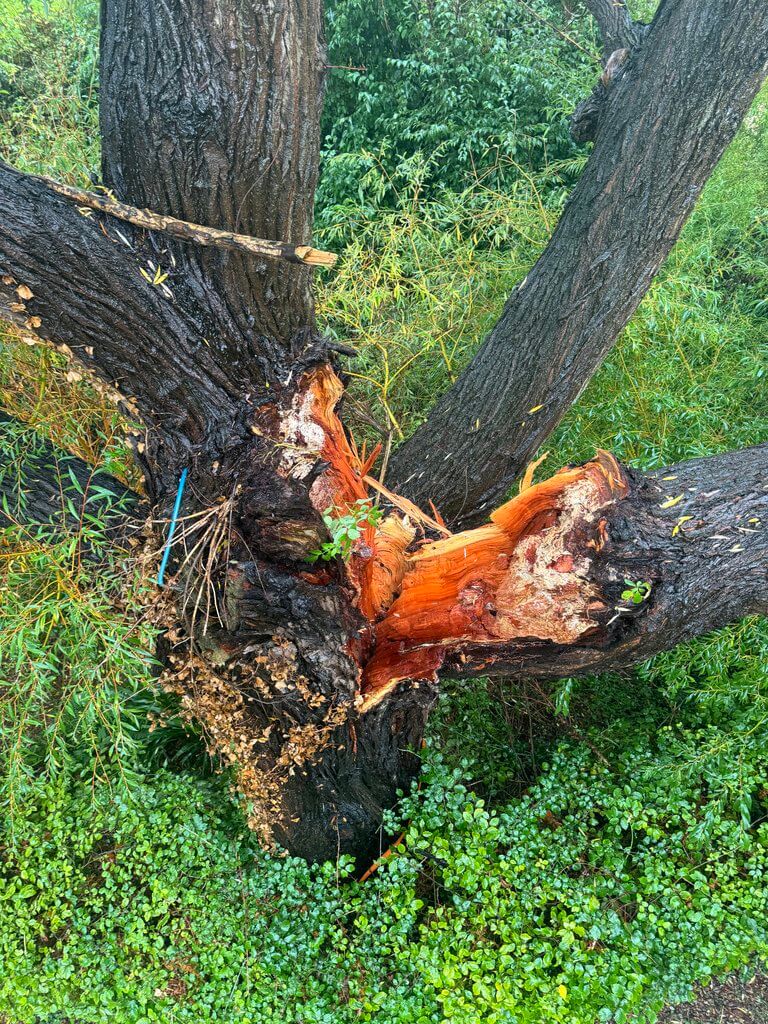
Large cracks, splits or areas where branches appear to be pulling apart can indicate a structural problem.
Pay particular attention to:
- Vertical cracks running along the trunk.
- Splits around major branch unions.
- Large cracks following storms or strong winds.
- Areas where the trunk appears to have separated.
Not every crack means a tree is about to fall over, but significant structural defects shouldn’t be ignored.

3. Fungal Growth or Large Cavities
Mushrooms or fungal growth around the base of a tree can sometimes indicate decay within the tree or its root system.
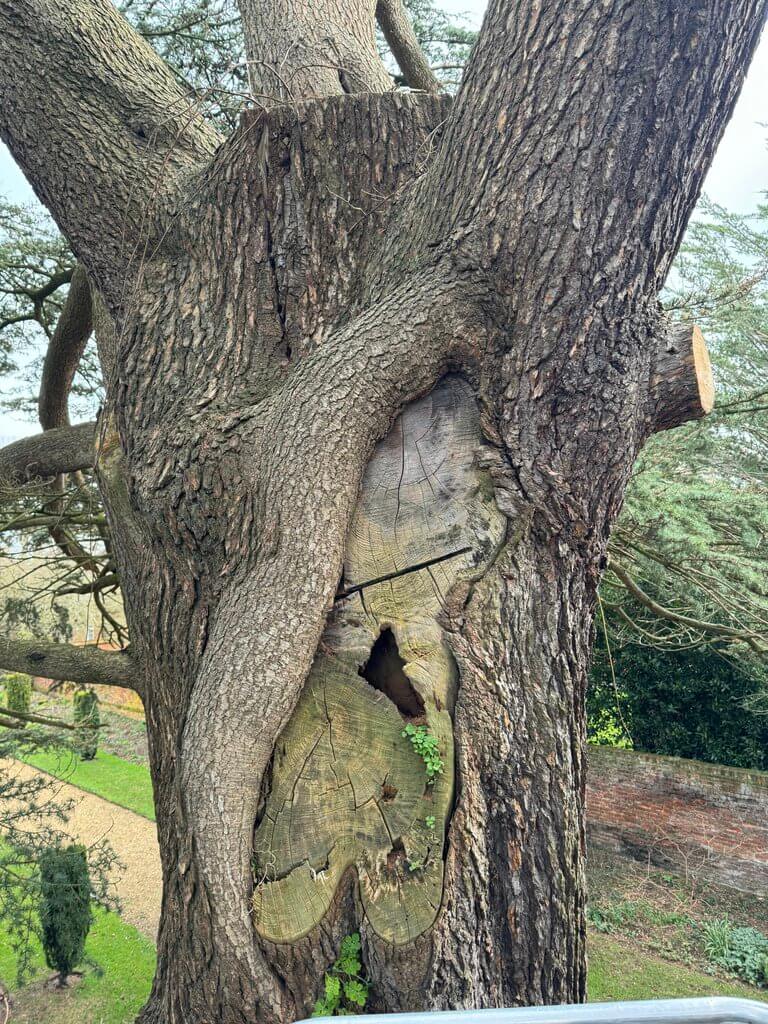
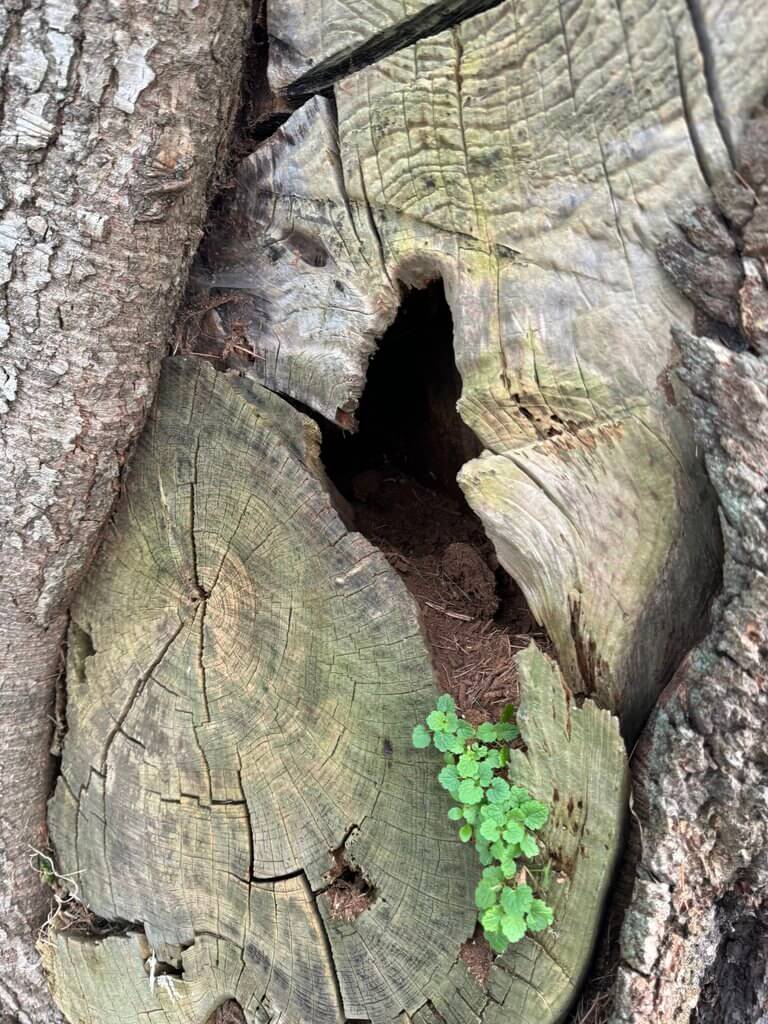
Likewise, large cavities, hollow areas or sections of missing bark can be signs that deserve further investigation.
It’s worth remembering that fungi don’t automatically mean a tree is dangerous. Trees and fungi have a complicated relationship, and some fungal growth can be harmless.
However, large fungal fruiting bodies combined with other signs of decay or structural weakness are worth getting professionally assessed.
In other words, don’t panic at the sight of one mushroom — but don’t ignore a tree that looks like it’s slowly becoming a woodland hotel either.
4. A Noticeable Lean
Trees don’t always grow perfectly straight, and a natural lean isn’t necessarily a problem.
The concern is when a tree develops a new or changing lean, particularly following severe weather or when the ground around the roots appears disturbed.
Look for:
- A noticeable change in the tree’s angle.
- Soil lifting or cracking around the base.
- Exposed or damaged roots.
- A tree that appears to have shifted following strong winds.
If a large tree suddenly looks like it’s decided to head somewhere else, it’s worth getting it checked.
5. Damaged or Exposed Roots
A tree’s stability depends heavily on its root system, so problems around the base shouldn’t be overlooked.
Construction work, excavation, vehicle damage, soil erosion or changes to the surrounding ground can potentially affect roots.
Look for:
- Newly exposed roots.
- Severed or damaged roots.
- Soil cracking or lifting.
- Significant changes to the ground around the tree.
- Evidence of recent excavation close to the trunk.
Root problems can be particularly difficult to assess from ground level, which is another reason professional inspection can be useful.
6. Large Branches Rubbing Against Each Other
Branches occasionally rub together naturally, but significant contact between large limbs can cause damage over time.
Repeated movement in strong winds can wear away bark and create wounds where decay organisms can enter.
If two major branches are rubbing, crossing or pressing against one another, it may be worth having the structure assessed.
The solution isn’t necessarily to grab a saw and start hacking away. Trees are surprisingly complicated things, despite their rather convincing “big green stick” appearance.
7. The Tree Has Been Damaged by a Storm
After strong winds, heavy rain or storms, it’s worth checking mature trees around your property.
Storm damage can include:
- Broken branches.
- Hanging limbs.
- Split branch unions.
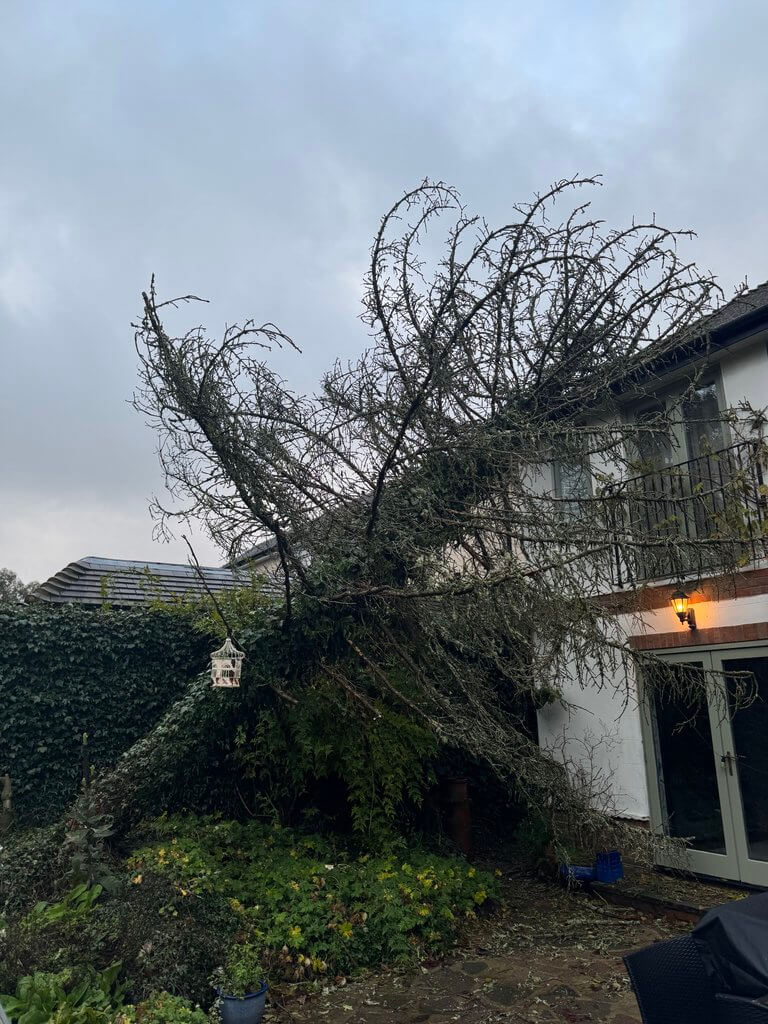
- Uprooted or partially uprooted trees.
- Damaged roots.
- New cracks in the trunk.
Some damage is obvious. Other problems can be hidden high in the canopy.
If a large tree has suffered significant storm damage, keep people away from the immediate area and seek professional advice before attempting any cleanup yourself.
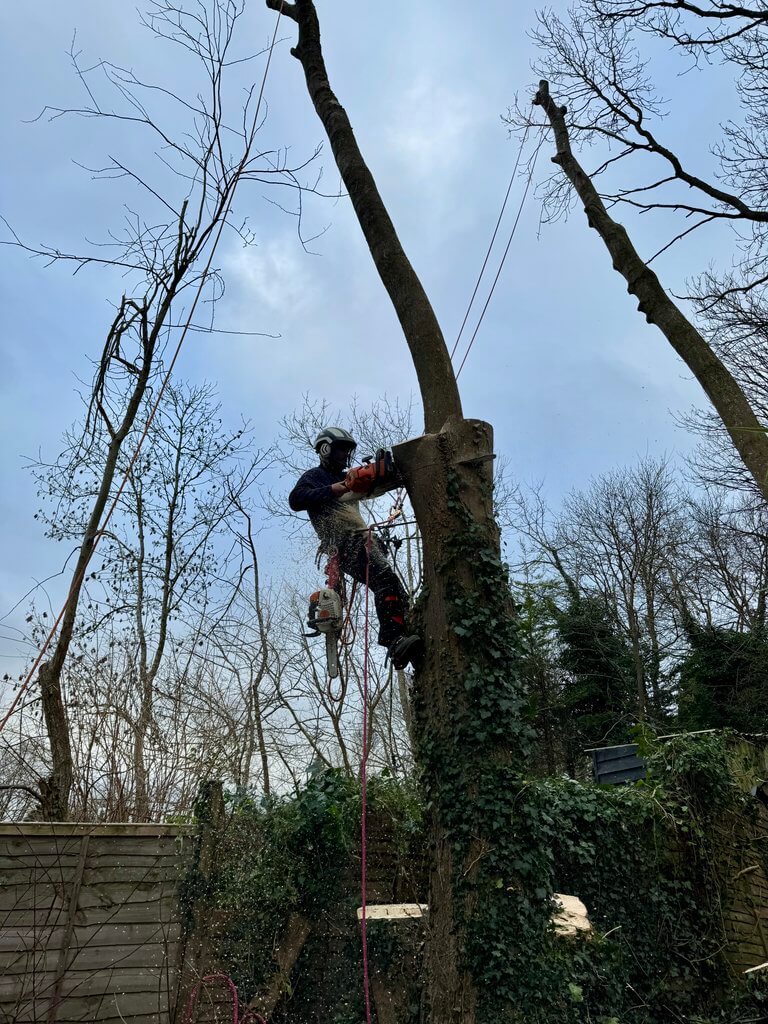
When Should You Call a Tree Surgeon?
Not every unusual-looking tree is dangerous, and a single warning sign doesn’t automatically mean a tree needs to be removed.
However, if you notice several of these signs, or you’re simply uncomfortable about the condition of a large tree near your property, it’s sensible to have it assessed.
A professional tree surgeon can inspect the tree, identify potential defects and explain whether pruning, monitoring or further work is appropriate.
This is particularly important where trees are close to:
- Houses and other buildings.
- Roads and public footpaths.
- Driveways and parking areas.
- Play areas or gardens regularly used by children.
- Neighbouring properties.
Tree Surgeons Across Buckinghamshire
Your Local Tree Surgeons provides professional tree care across Buckinghamshire, including Amersham, High Wycombe, Beaconsfield and surrounding areas.
Whether you’ve noticed a suspicious crack, storm damage, dead branches or simply have a tree that is giving you a bad feeling, we’re happy to discuss your concerns.
You don’t need to become an amateur arborist overnight. Sometimes the easiest solution is simply to get someone who knows their way around a tree to take a look.
Concerned About a Tree?
Contact Your Local Tree Surgeons to make an enquiry
We’ll discuss the tree, the concerns you’ve noticed and the appropriate next steps.
0 Comments