
Trees are an important part of the landscape across Buckinghamshire. From established gardens in Amersham and Beaconsfield to residential streets and larger properties around High Wycombe, mature trees provide shade, privacy, wildlife habitats and visual appeal. However, trees require appropriate care to remain healthy, structurally sound and suitable for their surroundings.
One of the most important aspects of professional tree maintenance is tree pruning. Removing selected branches at the right time can help manage a tree’s structure, address specific hazards and maintain its relationship with nearby buildings, paths and gardens. Pruning incorrectly, excessively or at an unsuitable time, however, can cause unnecessary damage and create long-term problems.
So, when should you have a tree pruned? Is winter always the best time? Should you wait until branches become dangerous? And how can you tell whether your tree needs a simple maintenance prune or a more involved tree surgery service?
In this guide, Your Local Tree Surgeons explains the key considerations for homeowners, landlords and commercial property owners across Buckinghamshire. We’ll look at the best times of year to prune different trees, the warning signs to look out for, common pruning techniques and why professional advice can make a difference.
Whether you’re based in Amersham, High Wycombe, Beaconsfield, Chesham, Marlow or elsewhere in Buckinghamshire, understanding the basics of tree pruning can help you make informed decisions about your property’s trees.
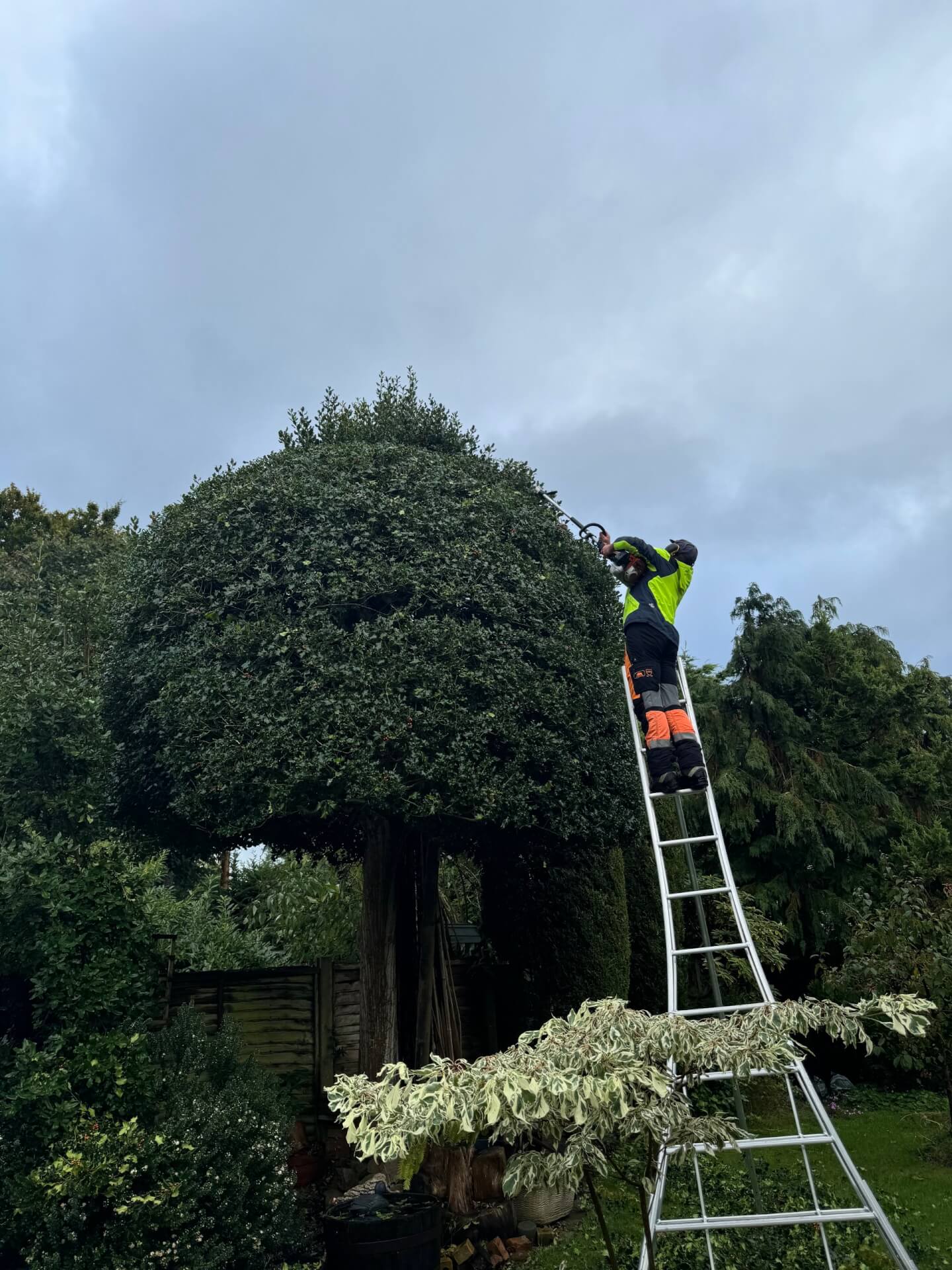
What Is Tree Pruning and Why Is It Important?
Tree pruning is the careful removal of selected branches, shoots or other parts of a tree to achieve a particular management objective. This might include removing deadwood, addressing damaged branches, improving clearance or managing the size and structure of a tree.
Unlike simply cutting back branches, professional pruning involves understanding how a tree grows, how it responds to cuts and how the work affects its long-term condition.
Every tree is different. A young ornamental tree in a small garden has different requirements from a mature oak in a large Buckinghamshire property. The species, age, health, structure, location and intended outcome should all be considered before pruning begins.
The benefits of professional tree pruning
Appropriate pruning can help to:
- Remove dead, damaged or diseased branches: This can address specific defects and reduce the risk associated with certain branches.
- Improve tree structure: Selective pruning can help manage competing branches and structural issues where appropriate.
- Maintain clearance: Branches may need to be managed where they interfere with buildings, paths, driveways or other property features.
- Support tree health: Targeted work can address particular problems, although pruning is not a universal treatment for disease or poor health.
- Manage growth: Some trees may benefit from carefully planned size or canopy management.
- Preserve appearance: Pruning can help maintain a tree’s form and suitability for its surroundings.
It is important to remember that pruning is not automatically beneficial simply because branches are removed. Excessive or poorly executed pruning can damage a tree, increase stress and lead to unwanted regrowth or decay. A professional tree surgeon should assess whether pruning is necessary and what level of intervention is appropriate.
Tree pruning vs tree trimming
The terms tree pruning and tree trimming are often used interchangeably, particularly when homeowners are searching for local services. In practice, tree pruning generally refers to the considered removal of selected growth for a defined purpose, while tree trimming is a broader, less technical term that can describe cutting back vegetation.
When looking for tree pruning in Buckinghamshire, it is worth choosing a company that explains the proposed work clearly rather than focusing solely on how much of the tree can be cut back.
When Is the Best Time of Year to Prune Trees?
One of the most common questions asked by homeowners is whether trees should be pruned in winter, spring, summer or autumn.
The answer depends on the tree species, its health, the type of pruning required and the reason for the work. There is no single season that is suitable for every tree or every pruning job.
For many established deciduous trees, structural and maintenance pruning can often be planned during the dormant season. However, specific circumstances may make work appropriate at other times of year. Dead or hazardous branches should not necessarily be left until winter, and some species have particular seasonal considerations.
Winter pruning
Winter is often associated with tree pruning because many deciduous trees have shed their leaves, making the branch structure easier to inspect. Dormant-season work can also be useful for certain pruning objectives.
Potential advantages include:
- Improved visibility of the tree’s branch structure.
- Easier identification of dead and damaged branches in some situations.
- Reduced interference from active foliage.
- Practical access to the canopy for certain types of work.
However, winter conditions can present challenges. Frozen ground, strong winds, wet weather and difficult access may affect the safety and suitability of tree surgery operations. Some trees and situations require different timing, so a blanket winter-pruning approach is not appropriate.
Important: Do not assume that every tree should be pruned in winter. Species-specific requirements and the reason for pruning should guide the decision.

Spring pruning
Spring is when many trees begin active growth, with buds opening and new foliage developing. It is also a season when wildlife considerations become particularly important.
Before carrying out pruning, the tree’s condition, species and the presence of nesting birds should be considered. Some pruning work may be better scheduled outside periods of active growth, while other work may be justified when there is a specific need.
Spring can be suitable for certain tree care tasks, but it is not automatically the best time for significant pruning of every species.
Summer pruning
Summer pruning may be appropriate for particular tree species and management objectives. Some fruit trees, for example, have pruning requirements that differ from those of large ornamental or native trees.
In some circumstances, summer work can be useful for assessing the tree when it is in full leaf. However, pruning during active growth should be carefully considered, especially where the tree is stressed by drought, heat or other environmental conditions.
A professional assessment can help establish whether summer pruning is appropriate for the individual tree.
Autumn pruning
Autumn can be a practical time to plan tree maintenance, but it is not automatically suitable for all pruning activities.
As leaves begin to fall, homeowners may notice branches that need attention or changes in the tree’s structure. At the same time, changing weather, wet conditions and wildlife considerations should be taken into account.
If you are considering tree pruning in Buckinghamshire during autumn, it is sensible to arrange an assessment early enough for the work to be planned safely and appropriately.
Is there a single best season?
The best time to prune a tree depends on the species, the tree’s condition and the objective of the work.
Rather than selecting a date based only on the calendar, a qualified tree surgeon can assess the tree and recommend a suitable approach. Where safety issues or damaged branches are present, delaying work solely to reach a preferred season may not be appropriate.
5. Signs That Your Tree Needs Pruning
You don’t always need to wait for a scheduled maintenance visit to identify that a tree may require attention. Certain changes in a tree’s appearance, structure or surrounding environment can indicate that an inspection would be worthwhile.
Although some signs are relatively straightforward to identify, homeowners should avoid assuming that a particular symptom always means a tree needs pruning. A qualified assessment is important where the cause or severity is unclear.
1. Dead or broken branches
Deadwood can occur naturally as trees grow and shed branches, but larger dead or broken branches may pose a risk, particularly when they are located above frequently used areas.
Look out for:
- Large branches with no signs of life.
- Branches broken following strong winds.
- Hanging or partially detached limbs.
- Cracked branches or areas of visible damage.
The appropriate response depends on the branch’s size, condition, position and the risk it presents. Some deadwood can have significant wildlife value, so removing every dead branch is not necessarily appropriate. Safety, biodiversity and the tree’s overall condition should be considered together.
If you notice a large broken branch over a pathway, entrance or area used by people, arrange professional advice promptly.
2. Branches growing too close to buildings
Trees growing near homes, garages, outbuildings and other structures may eventually require management as their branches develop.
Branches touching or rubbing against a roof, guttering or external surfaces can create maintenance concerns. However, cutting back all branches that approach a building is not always the best solution.
A tree surgeon can assess whether selective pruning, clearance work or simply monitoring the growth is appropriate.
For properties in areas such as Amersham and High Wycombe, where gardens and established trees can be found close to buildings, considering the relationship between a tree and its surroundings is an important part of responsible maintenance.
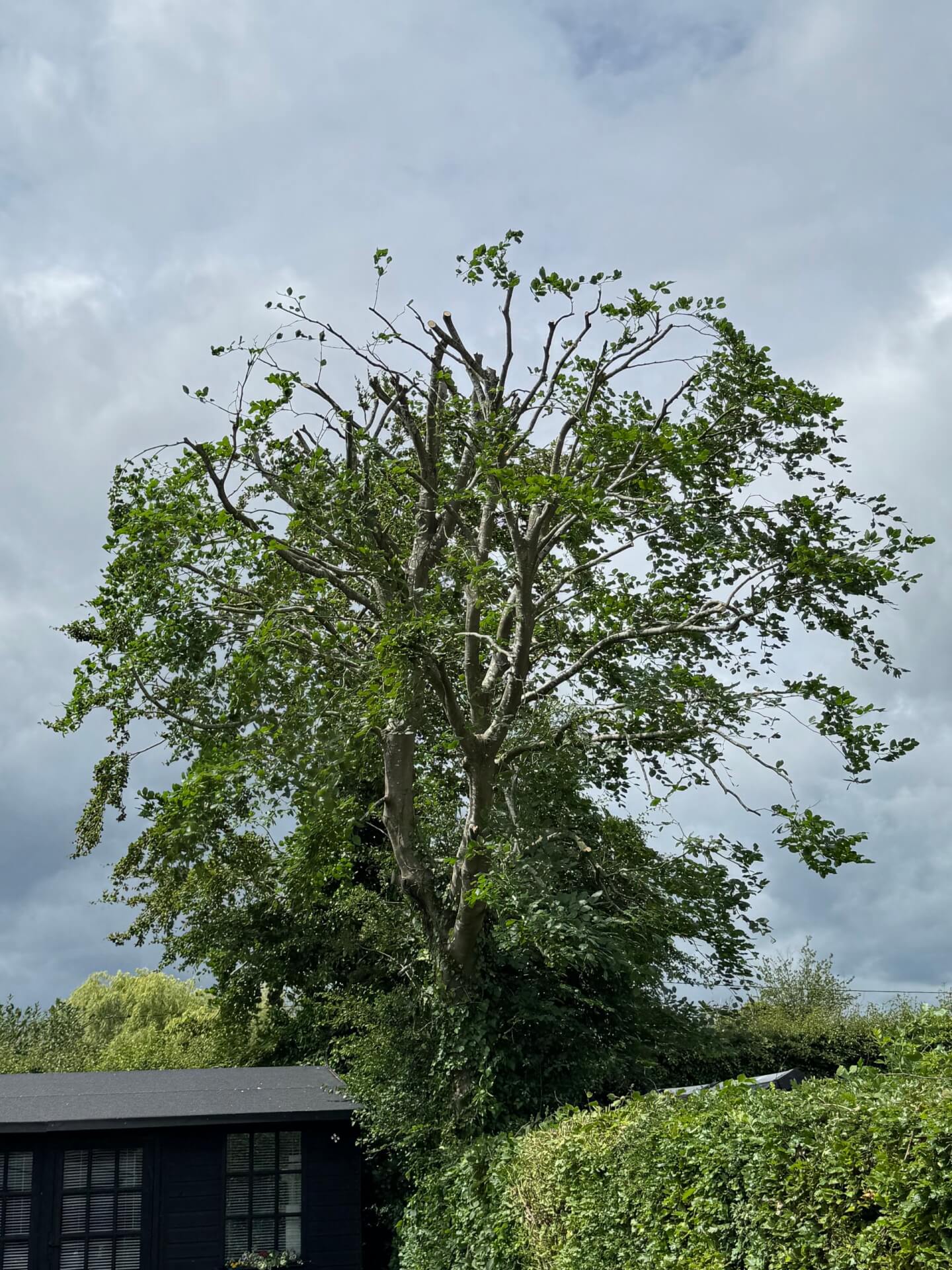
3. Overgrown or overcrowded branches
Some trees develop dense areas of growth or branches that compete for space. Depending on the species and structure, selective pruning may help address particular management objectives.
However, a dense canopy is not automatically unhealthy. Trees naturally develop different growth patterns, and removing too much foliage can reduce the tree’s ability to photosynthesise and cause stress.
A professional tree surgeon should identify whether the tree actually requires thinning, structural pruning or another approach.
4. Branches obstructing paths, driveways or access
Trees growing near footpaths, driveways and entrances may require occasional maintenance to maintain appropriate clearance.
Pruning may be considered where branches obstruct access, interfere with vehicles or affect the use of a property. The work should be proportionate and avoid unnecessarily damaging the tree.
For commercial premises, landlords and property managers, keeping access routes clear can also form part of wider site maintenance planning.
5. Structural defects or unusual growth
A tree may require inspection if you notice:
- Significant cracks or splits.
- Branches with weak or poorly attached unions.
- Excessive leaning or changes in position.
- Cavities or areas of decay.
- A sudden change in canopy condition.
- Large branches that appear unsupported or damaged.
These signs do not necessarily mean a tree is dangerous or needs to be removed. They indicate that further assessment may be appropriate. Structural concerns should be assessed by a suitably competent arborist, particularly when they involve large trees or areas used by the public.
6. How Often Should Trees Be Pruned?
There is no universal pruning schedule that applies to every tree.
Some trees may require occasional maintenance every few years, while others may need more regular attention because of their growth rate, location or specific management requirements. Newly planted trees, mature trees and veteran trees can all have different needs.
A sensible maintenance programme considers:
- The species and age of the tree.
- The tree’s current condition and structure.
- Its proximity to buildings, roads and public areas.
- Previous pruning work.
- The objectives of the property owner.
- Any relevant legal or environmental restrictions.
Young trees
Early structural pruning, where appropriate, can help establish a suitable framework as a tree grows. The aim is not to remove large amounts of growth unnecessarily, but to address specific structural or developmental considerations.
Young trees are often easier to manage when potential problems are identified early. However, pruning should still be carried out with an understanding of the species and its growth habits.
Mature trees
Mature trees can require a more considered approach. Large cuts, excessive canopy reduction and repeated heavy pruning may cause problems that take years to develop.
Routine inspections and targeted maintenance can help identify changes in condition and determine whether intervention is necessary.
For homeowners with established trees in Buckinghamshire, arranging periodic professional assessments can help with forward planning, especially where trees are near buildings, boundaries or regularly used areas.
Veteran and ancient trees
Older trees may contain important habitat features, including cavities, deadwood and decaying branches. Their management requires particular care.
Pruning decisions should account for the tree’s ecological value, structural condition and long-term preservation. In some circumstances, retaining deadwood or using minimal intervention may be preferable, provided safety considerations are appropriately addressed.
A tree’s age alone does not determine how often it should be pruned. Its condition, setting and management objectives are more important than following an arbitrary timetable.
7. Understanding Different Types of Tree Pruning
When you contact a professional tree surgeon, you may hear terms such as crown reduction, crown thinning, crown lifting and deadwood removal.
These describe different approaches to tree management. Understanding the distinctions can help you discuss the work required for your property.
Crown reduction
Crown reduction involves reducing the overall size or extent of a tree’s canopy through carefully selected branch cuts.
It may be considered where a tree has outgrown its surroundings or where there is a specific reason to manage its dimensions. The amount of reduction should be appropriate to the species, tree condition and desired outcome.
Poorly executed reduction can leave large wounds, create an unnatural shape and encourage dense regrowth. For this reason, substantial crown reduction should be carefully planned rather than treated as routine branch cutting.
Crown thinning
Crown thinning involves selectively removing a proportion of branches throughout the canopy to alter its density.
The purpose and extent of thinning should be clearly defined. Excessive thinning can remove too much foliage, change the tree’s appearance and lead to undesirable growth responses.
Not every dense tree needs thinning, and the technique should not be used simply because a homeowner wants to see more sky through the canopy.
Crown lifting
Crown lifting involves removing or managing selected lower branches to increase clearance beneath the canopy.
It can be considered where branches interfere with pathways, driveways, buildings or other features. The work should be proportionate to the tree and avoid unnecessarily removing large lower limbs.
Deadwood removal
Deadwood removal involves removing selected dead branches where there is a defined reason to do so, such as addressing a specific risk or management objective.
Deadwood is also an important habitat resource. Not all dead branches need to be removed, particularly where they are not presenting an unacceptable risk. The ecological value of the tree should be considered alongside safety and access requirements.
Formative pruning
Formative pruning is generally associated with managing the development of younger trees. It may involve selecting suitable branches and addressing structural issues as the tree grows.
This type of work can support the development of an appropriate framework, although the exact approach depends on the species and the tree’s stage of development.

8. Tree Pruning in Buckinghamshire: What Local Homeowners Should Consider
Buckinghamshire includes a mixture of urban neighbourhoods, established residential areas, rural properties and mature landscapes. The requirements for tree maintenance can vary considerably from one property to another.
Your Local Tree Surgeons serves customers across the county, including its hometown of Amersham and areas such as High Wycombe, Beaconsfield and surrounding communities.
Local conditions are relevant when planning tree work, but there is no single pruning method that applies to every tree in Buckinghamshire. The species, site conditions and surrounding property should always guide the recommendation.
Tree pruning in Amersham
Properties in and around Amersham may feature established gardens, mature trees and trees growing close to residential buildings.
Homeowners considering pruning should look at the tree’s size, canopy spread, proximity to structures and whether previous work has affected its form.
Where trees are located near boundaries or neighbouring properties, it is also worth establishing who owns the tree and whether permission is required to access the land.
Tree pruning in High Wycombe
High Wycombe and its surrounding areas include a variety of residential and commercial properties. Trees may be located in gardens, along access routes, near parking areas or around business premises.
For commercial customers and landlords, tree maintenance may form part of a wider property management programme. Planning work in advance can help identify potential access requirements and minimise disruption.
Tree pruning in Beaconsfield
Mature trees are a feature of many established residential settings. Where a tree is close to a house, driveway or garden boundary, a professional inspection can help determine whether pruning is necessary and what type of work is appropriate.
Homeowners should avoid assuming that trees need substantial cutting back simply because they have become large. Mature trees can provide valuable environmental and aesthetic benefits, and the aim should be appropriate management rather than unnecessary reduction.
Tree surgery across Buckinghamshire
Whether you need advice on a tree in Amersham, maintenance for a property in High Wycombe or pruning work in Beaconsfield, the first step is to understand the tree’s requirements.
Your Local Tree Surgeons can use a site assessment to discuss the condition of the tree, the reason for pruning and the most appropriate next steps.

9. Do You Need Permission to Prune a Tree in Buckinghamshire?
Before arranging tree pruning, it is important to check whether the tree is protected or subject to other restrictions.
In England, trees may be protected by a Tree Preservation Order (TPO) or because they are located within a conservation area. Additional restrictions may also arise from planning conditions or legal agreements associated with a property.
Buckinghamshire Council provides guidance and resources for checking tree protection and applying for consent.
Tree Preservation Orders (TPOs)
A Tree Preservation Order protects specific trees, groups of trees or woodlands in the interests of amenity. You generally need the local planning authority’s consent before carrying out work that affects a protected tree.
This can include pruning, lopping, topping, uprooting or other work covered by the relevant order.
You can use Buckinghamshire Council’s tree protection resources to investigate whether a tree may be protected. Its online map is provided for guidance and should not be treated as definitive confirmation that a tree is or is not protected.
Conservation areas
Trees within conservation areas may also be subject to legal controls. Buckinghamshire Council states that consent or the appropriate notification process is required for relevant work to trees in conservation areas, depending on the circumstances.
If you’re unsure whether permission is required, it is worth checking with the council or obtaining advice from a suitably qualified tree professional before work begins.
What if the tree is dangerous?
There are specific provisions for certain urgent situations involving dead or imminently dangerous protected trees. The applicable requirements depend on the circumstances, and appropriate notice or evidence may be necessary.
Do not assume that describing a tree as dangerous automatically removes all legal requirements. Buckinghamshire Council provides specific instructions for work on dead or imminently dangerous trees.
Wildlife considerations
Tree work should be planned with wildlife protection in mind. Birds, bats and other species may use trees for nesting, roosting or shelter, and relevant wildlife legislation applies.
The presence of a nest or potential bat roost can affect how work should be carried out. If there is any doubt about protected wildlife, seek appropriate advice before proceeding.
Your Local Tree Surgeons should assess the proposed work and discuss any relevant permission or wildlife considerations, but homeowners should also understand that responsibility for obtaining the necessary consent depends on the circumstances and the applicable legal requirements.
10. What Happens During a Professional Tree Pruning Service?
If you’ve never arranged tree pruning before, you may be unsure what to expect. A professional service should begin with an assessment rather than immediately cutting branches.
The exact process will vary depending on the size of the tree, the complexity of the work and the property’s surroundings, but a typical approach includes the following stages.
Step 1: Initial assessment
The tree surgeon examines the tree and considers its condition, structure, location and the reason for the proposed work.
This is an opportunity to discuss any concerns you have, such as branches overhanging your roof, excessive growth or a desire to improve clearance.
The assessment should help establish whether pruning is necessary and what the proposed work is intended to achieve.
Step 2: Discussing the recommended work
The tree surgeon should explain the proposed pruning method and the reasons for recommending it.
For example, the appropriate approach may involve selective deadwood removal, crown lifting or a specific structural pruning objective rather than a general reduction of the canopy.
You should have the opportunity to ask questions about the extent of the work, potential effects on the tree and any relevant access arrangements.
Step 3: Checking the working area
Before work begins, the working area should be considered. This can include:
- Buildings and nearby structures.
- Garden features, fences and greenhouses.
- Driveways, paths and access routes.
- Vehicles and other property.
- Overhead cables or other obstacles.
- People and animals who may be nearby.
The work should be planned with appropriate safety controls and access arrangements.
Step 4: Carrying out the pruning
The tree surgeon carries out the agreed work using suitable equipment and techniques.
The exact method depends on the tree and the pruning objective. Larger trees may require specialist climbing equipment or other access systems, while smaller trees may be accessible using ground-based methods.
The objective should be to complete the work safely and in a way that supports the agreed management plan.
Step 5: Clearing the site
Once pruning is complete, the team should discuss the handling of branches, logs and other material arising from the work.
Depending on the service agreed, this may include removing timber, processing branches into woodchip or leaving selected material on site.
It is worth clarifying what is included in your quotation before work starts, particularly if you have limited access or specific requirements for garden tidiness.

11. How Much Does Tree Pruning Cost in Buckinghamshire?
The cost of tree pruning varies from one property to another. There is no reliable single price that applies to all trees in Buckinghamshire because the work required can differ substantially.
When requesting a quote, it helps to understand the factors that may influence the total cost.
What affects the price of tree pruning?
Tree size and height: Larger trees may require more equipment, additional staff and specialist access arrangements.
Type of pruning required: A straightforward maintenance prune may involve considerably less work than substantial crown reduction or complex structural pruning.
Tree condition: Damaged or unstable trees may require additional planning and safety measures.
Access: Restricted access, narrow gardens, nearby buildings and difficult working conditions can affect how the work is carried out.
Location and site arrangements: The property’s setting, travel requirements and the handling of waste can influence the quotation.
Volume of material: The amount of timber and branches generated, along with whether removal is requested, can affect the overall service.
Why you should obtain a tailored quotation
A professional quotation should be based on the specific tree and the work proposed, rather than an assumption based solely on the tree’s height or location.
If you’re looking for tree pruning in Buckinghamshire, ask the company to explain:
- What pruning work is recommended.
- Which trees and branches are included.
- Whether waste removal is included.
- Whether access arrangements affect the cost.
- Whether any additional permissions or specialist assessments are required.
Your Local Tree Surgeons can discuss your requirements and provide an enquiry-based route towards understanding the work involved and the likely costs for your property.
A note on pricing
Be cautious of companies offering a fixed price without understanding the tree, the site and the required work. A proper assessment helps ensure that the quotation reflects the actual job rather than an arbitrary estimate.
12. Can Pruning Help Prevent Tree-Related Problems?
Tree pruning can form part of a wider maintenance strategy, but it is important to understand what it can and cannot achieve.
Appropriate pruning may address particular branches, clearance issues or structural concerns. It cannot guarantee that a tree will never fail, become diseased or cause damage.
Managing branches near property
Where branches grow towards buildings, selective pruning may help address specific clearance concerns. However, pruning should be based on the actual situation rather than the assumption that every branch near a property is a problem.
The condition of the tree, the species and the location of the branches all matter.
Addressing damaged growth
Removing selected damaged branches can be appropriate where they present a defined concern. The work should be assessed in the context of the tree’s overall structure and condition.
It is not always necessary to remove every damaged or dead branch, especially when habitat considerations are relevant.
Supporting long-term maintenance
Regular monitoring and appropriate maintenance can help homeowners identify changes in their trees.
Rather than waiting until a tree becomes an urgent concern, a proactive approach can provide an opportunity to plan work, consider the property’s requirements and avoid unnecessary intervention.
Pruning is one part of tree care. It should not be used as a substitute for proper inspection, appropriate species selection, structural assessment or wider property maintenance.
13. Common Tree Pruning Mistakes to Avoid
Many tree problems arise when pruning is approached as a simple cutting exercise rather than a considered form of tree management.
Here are some common mistakes homeowners should avoid.
Mistake 1: Cutting too much off the tree
Heavy pruning can remove a substantial proportion of a tree’s foliage and create large wounds.
Reducing a tree simply because it has become large can lead to unnecessary stress and unwanted regrowth. Any significant reduction should have a clear reason and be planned with the tree’s characteristics in mind.
Mistake 2: Choosing the wrong time
Although seasonal timing matters, there is no universal pruning season for all species and circumstances.
A homeowner should not assume that winter is always best, nor that a tree must wait until a particular month before a safety issue can be addressed.
Professional advice can help determine whether the proposed timing is suitable.
Mistake 3: Ignoring the tree’s structure
A tree’s branches are interconnected, and removing one branch can affect the surrounding structure.
Pruning decisions should consider branch attachment, future growth and the overall form of the tree.
Mistake 4: Attempting high-risk work without suitable expertise
Pruning a small ornamental tree is very different from working at height in a mature tree close to a building.
Large branches, specialist access equipment and proximity to structures can create significant hazards. Homeowners should not attempt work beyond their skills or available safety equipment.
Mistake 5: Forgetting to check legal restrictions
Even if pruning appears straightforward, protected trees and conservation areas may be subject to legal requirements.
Always establish whether relevant permissions or notifications are needed before work begins.
Mistake 6: Focusing only on appearance
A tree may look untidy without requiring substantial pruning. Conversely, a tree that appears attractive may still need inspection because of a structural issue.
The purpose of the work should be clearly identified, with the tree’s health, safety and surroundings considered alongside aesthetics.
14. Should You Prune Trees Yourself or Hire a Professional?
The right approach depends on the size of the tree, the type of work required and the level of risk involved.
Some basic garden maintenance may be manageable for a homeowner with suitable knowledge and tools. However, pruning larger trees or working near structures requires greater expertise and careful planning.
When DIY pruning may be suitable
Minor work on small, accessible trees may be appropriate where the homeowner understands the species, the purpose of the work and the limitations of what they are doing.
Even with smaller trees, it is important to avoid unnecessary cuts and to consider whether wildlife or legal restrictions apply.
When to call a professional tree surgeon
Professional advice is particularly important when:
- The tree is large or difficult to access.
- Branches are close to buildings or power lines.
- There are significant cracks, splits or damaged limbs.
- The work involves substantial canopy reduction.
- You are unsure whether a tree is protected.
- The tree is located near a public area or busy access route.
- You lack the equipment or experience to carry out the work safely.
A professional tree surgeon can help identify the appropriate method and explain what is involved before the work proceeds.
For homeowners across Buckinghamshire, a local tree care company can also provide practical guidance based on the property and its surroundings.
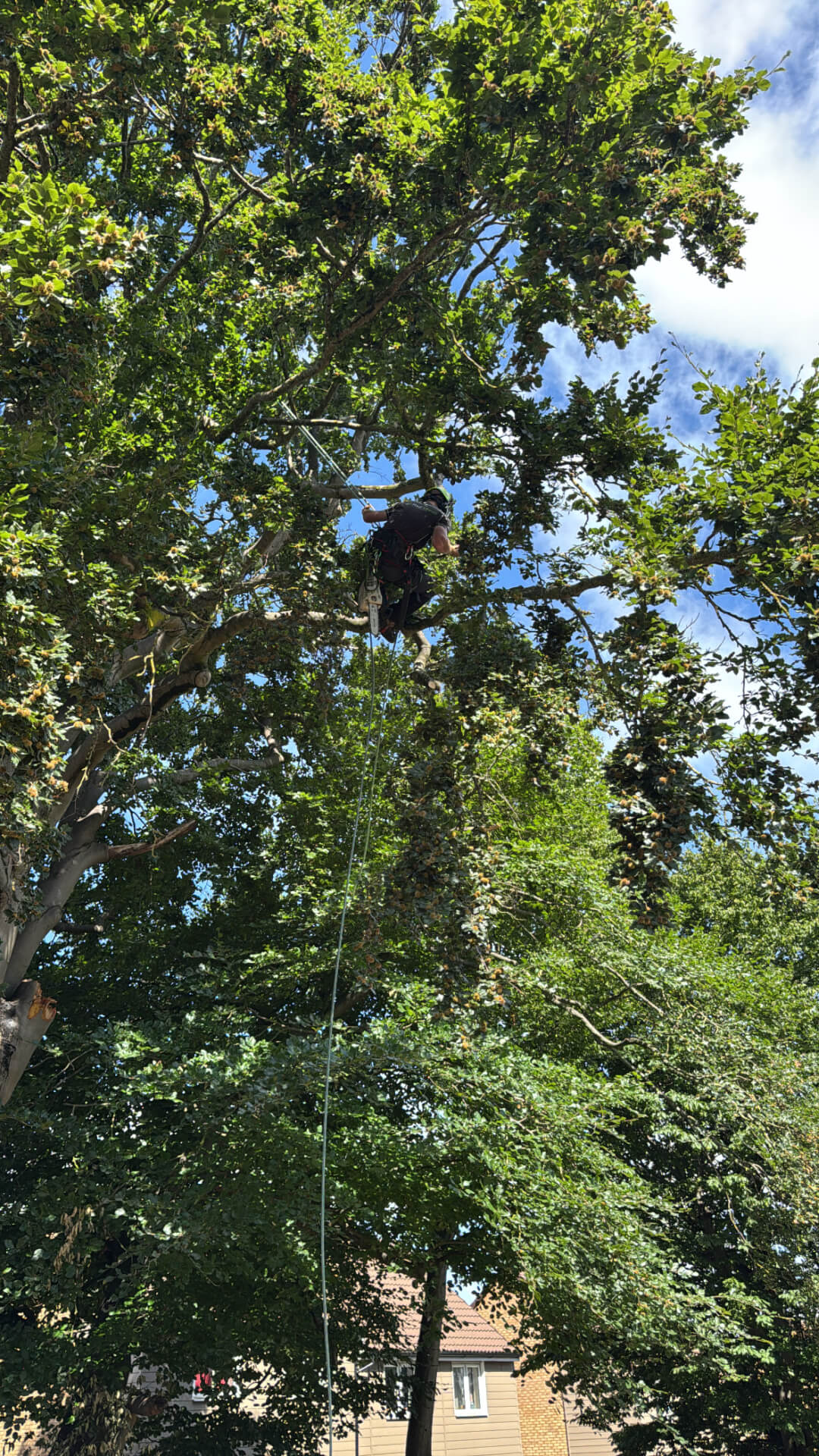
15. How to Choose a Tree Surgeon in Buckinghamshire
Choosing a tree surgeon is an important decision, particularly when the work involves mature trees, large branches or difficult access.
The company you choose should be able to explain the recommended work clearly and demonstrate an appropriate approach to safety and tree care.
Look for relevant experience
Ask about the company’s experience with the type of tree and work you require.
For example, pruning a mature oak near a property may require a different approach from maintaining a small ornamental tree in a garden.
A company with experience across different tree types and property settings can discuss the relevant considerations.
Request a clear quotation
A quotation should explain what work is proposed and what is included in the price.
Ask whether the quotation covers waste removal, access arrangements and any additional requirements that may affect the work.
Ask about insurance and qualifications
When appointing a tree surgeon, it is sensible to ask about relevant insurance, training and qualifications.
The appropriate requirements depend on the type of work, equipment and company arrangements. A reputable contractor should be able to explain its professional credentials and the safety measures used for your job.
Check whether permission is required
A responsible tree surgeon should be willing to discuss protected trees and relevant planning considerations. However, you should not assume that the contractor alone is responsible for every permission or legal obligation.
Confirm the requirements for your property and the proposed work before agreeing to proceed.
Consider local experience
If you live in Amersham, High Wycombe, Beaconsfield or elsewhere in Buckinghamshire, a company familiar with the local area may be able to discuss practical considerations relating to different property types and access arrangements.
Your Local Tree Surgeons works across Buckinghamshire, providing a local point of contact for homeowners, landlords and commercial customers seeking tree maintenance advice.
16. Frequently Asked Questions About Tree Pruning
What month is best for pruning trees in the UK?
There is no single best month for every tree. The ideal timing depends on the species, the condition of the tree and the objective of the pruning.
Many deciduous trees can be assessed for maintenance during the dormant season, but certain trees and pruning objectives may require different timing. Wildlife considerations and urgent safety issues should also be taken into account.
How do I know if my tree needs pruning?
Look for dead or damaged branches, growth interfering with buildings or access routes, and changes in the tree’s structure.
These signs do not automatically mean that pruning is necessary. A professional assessment can help determine whether intervention is appropriate.
Can tree pruning damage a tree?
Yes. Excessive or poorly executed pruning can cause damage, create large wounds, remove too much foliage and affect the tree’s future growth.
The amount and location of cuts should be carefully considered.
Is crown reduction the same as cutting a tree down?
No. Crown reduction involves reducing the extent of the tree’s canopy through selected branch cuts. Tree removal involves felling or otherwise removing the tree.
They are different operations with different objectives and implications.
How often should I have a tree pruned?
There is no fixed interval that applies to every tree. The frequency depends on the tree’s species, age, condition, growth and surroundings.
A tree care professional can help you establish whether ongoing maintenance is appropriate.
Do trees in Buckinghamshire need permission before pruning?
Some do. Trees protected by Tree Preservation Orders or located within conservation areas may be subject to legal requirements.
Check the applicable restrictions with Buckinghamshire Council before carrying out work.
Can tree pruning be carried out all year round?
The suitability of pruning depends on the tree and the circumstances. Seasonal timing, weather, wildlife and the reason for work should be considered.
You should not assume that all tree work is appropriate at any time of year.
What should I do if I notice a dangerous-looking branch?
Keep people away from an area where a branch presents an immediate hazard, where possible, and seek professional advice. If there is an immediate danger to people or property, take appropriate steps to protect safety.
Do not attempt to remove a large or unstable branch without suitable expertise and equipment.
17. Why Choose Your Local Tree Surgeons?
At Your Local Tree Surgeons, we understand that maintaining trees is about more than simply cutting back branches.
Whether you own a home in Amersham, manage a rental property in High Wycombe, operate a business in Beaconsfield or require tree care elsewhere in Buckinghamshire, it is important to have access to clear information and a service that understands your requirements.
Our approach is centred on discussing your needs, assessing the work involved and helping you understand the available options.
We recognise that every tree and property is different. The right pruning approach depends on the condition of the tree, its surroundings and the outcome you want to achieve.
Tree pruning services across Buckinghamshire
We can discuss tree maintenance requirements for:
- Residential gardens.
- Landlords and rental properties.
- Commercial premises.
- Trees near buildings and driveways.
- Routine maintenance and specific pruning concerns.
- Tree care enquiries across Amersham, High Wycombe, Beaconsfield and surrounding Buckinghamshire areas.
If you’re unsure whether your tree needs pruning, arranging an initial enquiry is a practical way to discuss your concerns and determine the next steps.

18. Conclusion: When Should You Have a Tree Pruned?
The best time to prune a tree depends on its species, condition, location and the purpose of the work. While certain maintenance activities may be suitable during the dormant season, there is no universal schedule that applies to every tree.
Regular monitoring can help you identify potential concerns, while professional assessment can help determine whether pruning is necessary and which approach is appropriate.
For homeowners and property managers across Buckinghamshire, responsible tree maintenance should take account of safety, tree health, wildlife and any relevant legal requirements. Whether your property is in Amersham, High Wycombe, Beaconsfield or another part of the county, the same fundamental principle applies: prune with a clear purpose and avoid unnecessary intervention.
If you’re concerned about a tree on your property, you don’t have to wait until the problem becomes more serious before seeking advice.
Need Professional Tree Pruning in Buckinghamshire?
Contact Your Local Tree Surgeons to discuss your tree pruning requirements.
Whether you need advice about a mature garden tree, branches growing near your property or ongoing maintenance for a commercial site, we’re available to discuss your enquiry.
Get in touch to explain what you need, arrange an assessment where appropriate and find out more about our tree surgery services across Buckinghamshire.
Get in touch
0 Comments